After 51 Years At The Loom, Erik Halvorsen Closes The Hudson Valley Workshop No Apprentice Final 800 Shawls Direct At $79
After 51 years weaving in the Hudson Valley, the 78-year-old master has no successor — and his final eight hundred shawls are leaving the loom this season.
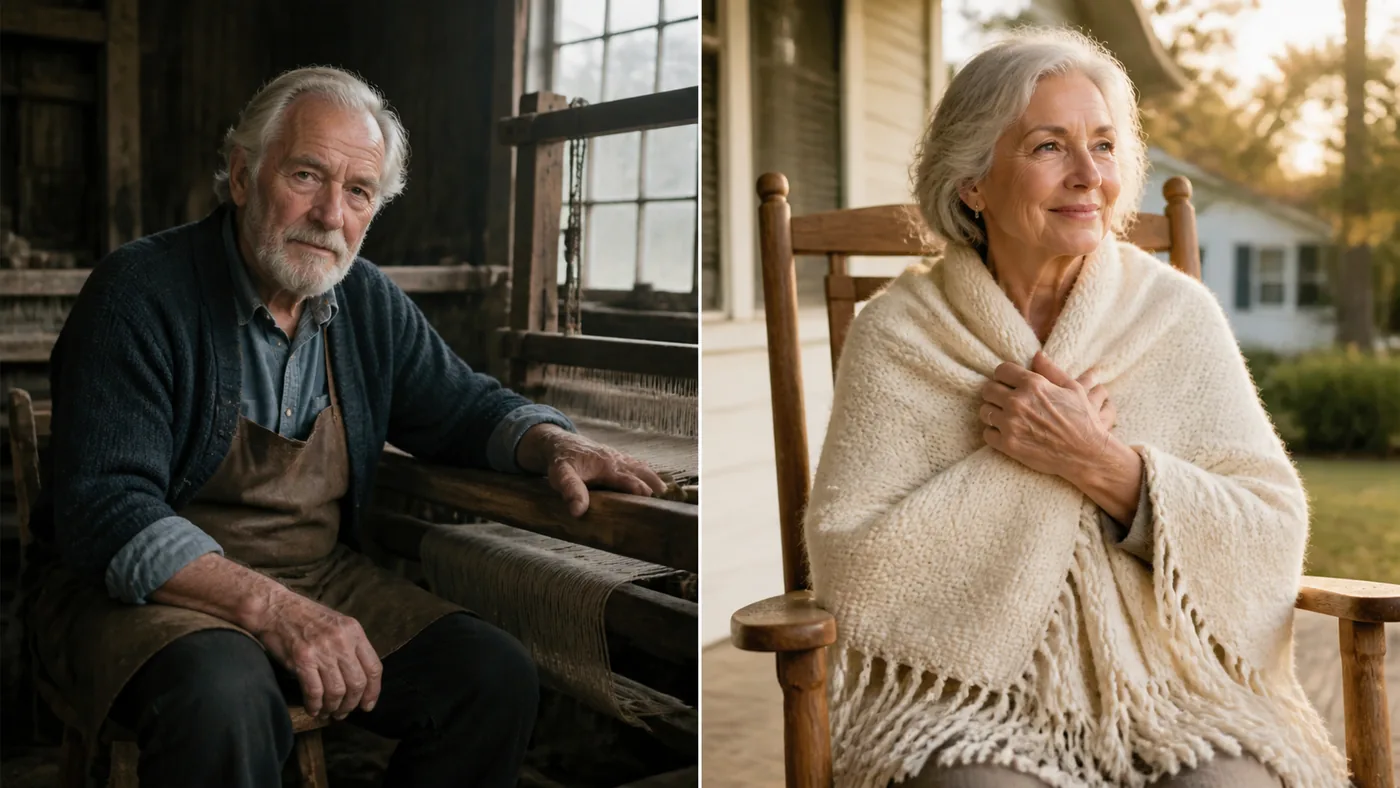
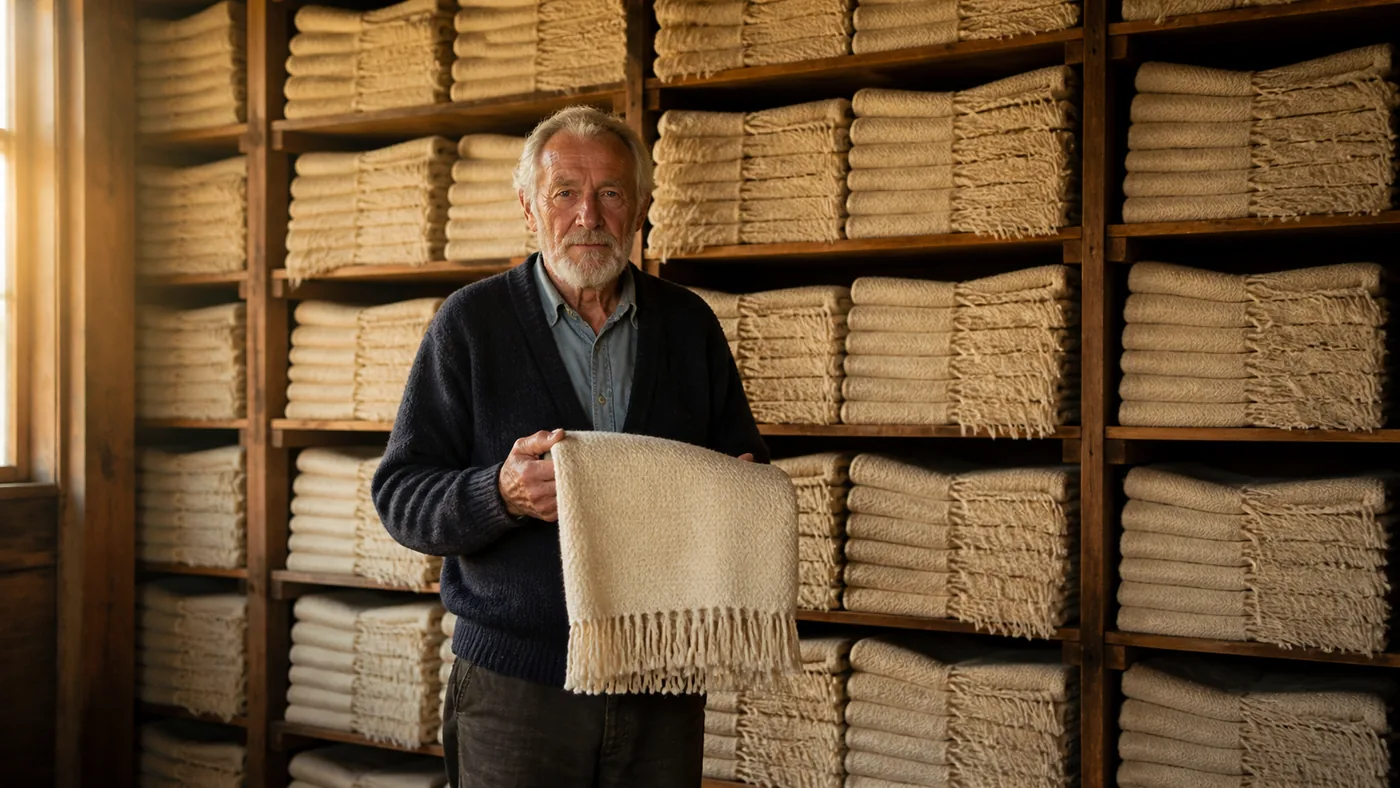
On a Tuesday morning in early March, Erik Halvorsen pulled the last warp through his grandfather's cast-iron loom in a converted barn outside Poughkeepsie. The Halvorsen workshop, in continuous operation since 1947, will close its doors at the end of this season.
Erik is 78. He has no apprentice. His son Daniel became an architect in Boston twenty years ago, and the young weavers who once trained beside him have all moved on. 'There's no one to take it over,' he says, sitting on the bench his father carved.
For 51 years, Erik wove for the Manhattan department store buyers who drove up twice a year and tagged his shawls at premium boutique prices. This year, with the workshop closing, he made a different decision: the final eight hundred shawls would go directly to the people who would actually wrap themselves into them.
What follows is the story of those eight hundred shawls — the last to ever leave the Halvorsen loom, going out before the first cold of the year.
From Bergen To Hudson Valley: A Loom Inherited
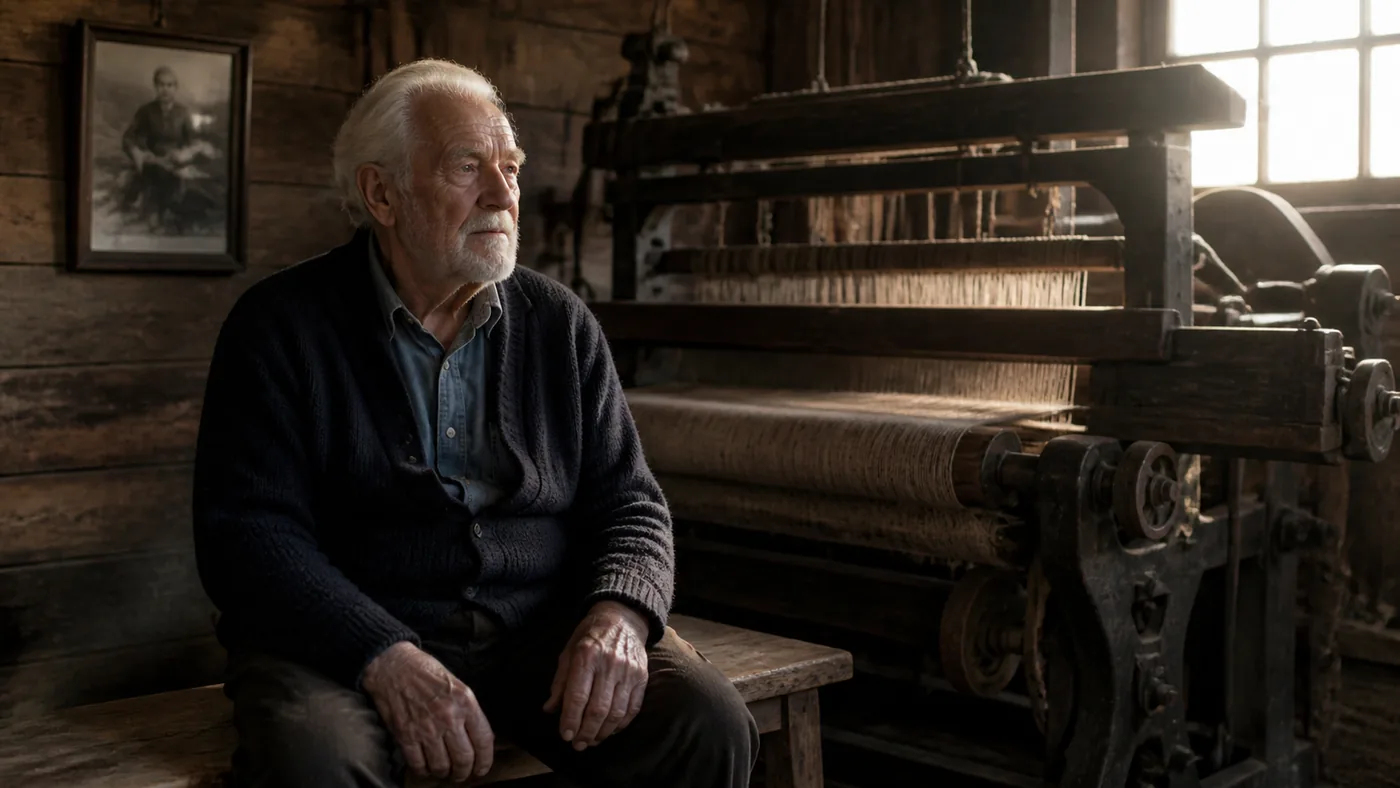
Erik didn't choose the loom. The loom chose him. He was born into the rhythm of the shuttle the way other children are born into music or sport — it was simply the sound of home.
His grandfather Sven arrived from Bergen in 1947 with one shuttle in his trunk and a small loan from a Norwegian-American credit union in Poughkeepsie. By six, Erik was sweeping wool dust beneath the floor pedals. By twelve, he could thread a warp. At 26, in 1974, he took over from his father.
'My father said a shawl should outlive the woman who wraps into it,' Erik recalls, his hands resting on the bench his father carved. The Halvorsens never wove for fashion seasons. They wove for daughters who would inherit them.
For three generations, Halvorsen shawls travelled out of the Hudson Valley to mothers in Connecticut, grandmothers in New England, and women whose daughters had saved for months to give them something made by hand.
"My mother received hers from my father in 1998 for her 60th birthday. She wrapped into it every winter evening for 27 years until she passed. I now wear it on Sundays. The wool is heavier than the day she got it."
The Last Apprentice Left In 2019 No One Came After

In November 2019, Marcus, the last apprentice Erik trained, packed his tools into a milk crate and drove to a coding bootcamp in Brooklyn. Erik watched from the barn door as the headlights disappeared down the gravel drive. He was 71 then, and for the first time since 1974, he was alone at the loom.
For five decades the workshop had been the architecture of his weeks. Monday warp-setting, Tuesday weaving, Wednesday selvedge, Thursday fringe — a rhythm his father had handed him and his grandfather had handed his father. Without an apprentice, the rhythm could continue, but only as long as Erik's shoulders and eyes held out.
'I had hoped my son Daniel would take it over,' Erik says, looking at the framed photograph of his son on the workshop wall. 'But he had his own life to build in Boston. Architecture. A different kind of structure.' There is no anger in his voice. Only quiet acceptance.
Through the winter of 2025, the workshop slowly emptied. Erik catalogued each shuttle, each spool, each pair of carved iron shears. For the first time in 51 years at the loom, he counted his finished inventory. Eight hundred shawls remained, stacked floor-to-ceiling on cedar shelving his grandfather had built.
That same week, a wholesale buyer from Manhattan called offering to take the entire stock at a fraction of what the boutiques would later charge. Erik thanked him and refused. The shawls would not end this way — auctioned to resellers, stamped with someone else's tag. They would go direct to mothers.
Two-And-A-Half Days On The Loom For Each Shawl
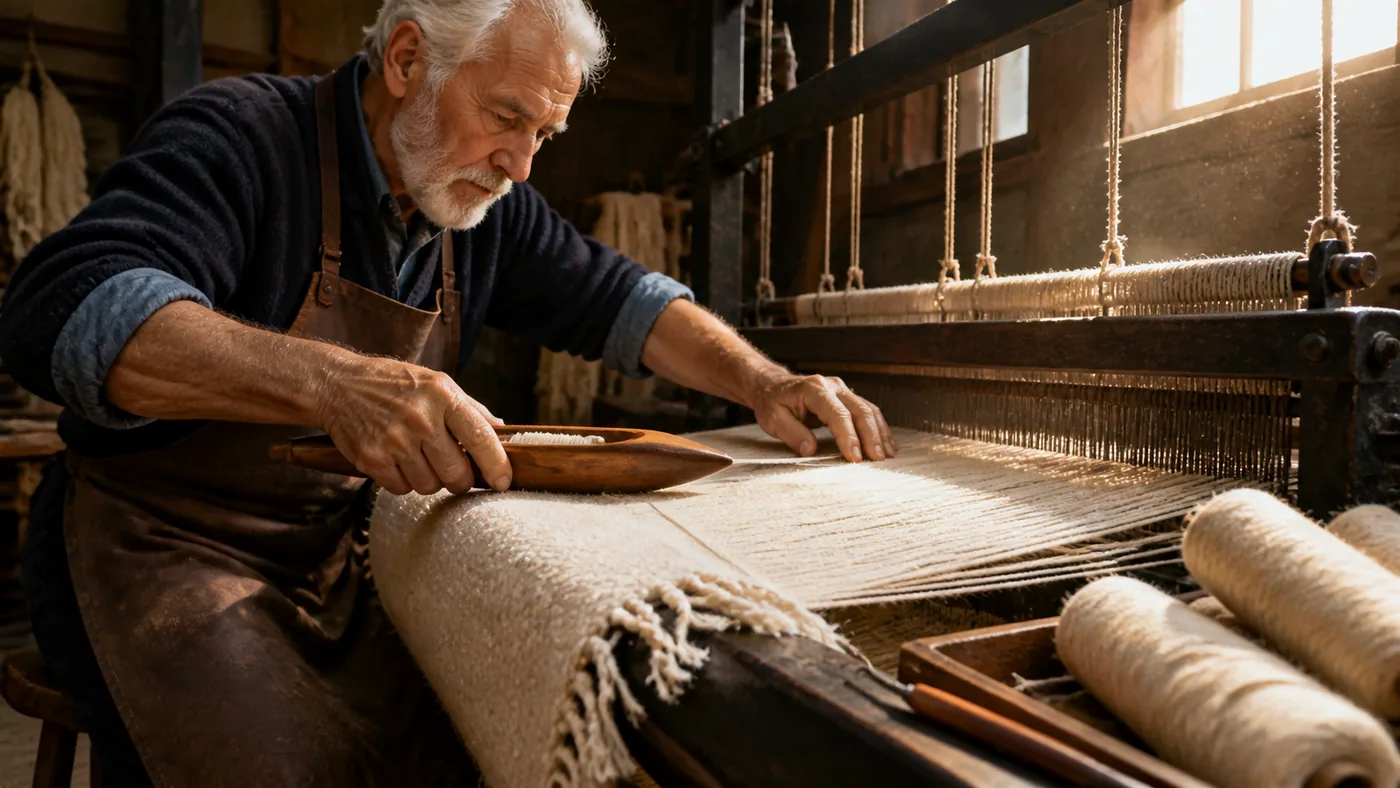
To understand why a Halvorsen shawl wraps differently than the wool wraps in any department store, you need to understand what happens between the warp going on the loom and the fringe being tied.
Each shawl begins with raw American wool that Erik sources from a single sheep farm in upstate New York. The fibers are hand-carded, slubbed by tension irregularities, and dyed in small batches in a copper vat behind the barn. The warp is set by hand — 280 vertical threads, each tied individually. The shuttle passes the weft 1,200 times for a single piece.
'A shawl is meant to be wrapped into, not draped,' Erik says. 'It needs weight. The mill machines don't put in weight. They put in length.' His shawls weigh nearly twice what a mass-market wool wrap weighs.
Two and a half days at the loom for a single shawl. Then six hours of hand-tied fringe — 96 individual knots along each end. Then hand-finished selvedge along both edges. A finished Halvorsen shawl represents close to 22 hours of human work.
A mass-production wool wrap is woven on industrial looms in 6 minutes, machine-fringed by automated knot-press, and selvedge-glued rather than hand-finished. The wool itself is often blended with synthetic fibers to cheapen the yarn weight. The product looks similar at a distance. Up close, the difference is unmistakable.
"I bought my mother a Halvorsen for her 70th in 2014. She wraps into it every November when the heat in her apartment kicks on. The wool has gotten softer with the years, never thinner. It feels like a hug she keeps on the chair."
Your Hands Won't Last Another Winter At This Loom

On February 14, 2026, Dr. Lin at Vassar Brothers Medical Center delivered the verdict. Erik's right shoulder — the throw-arm shoulder — had degenerated to the point where another full season at the loom would risk permanent damage.
'You can finish what's already on the loom,' Dr. Lin told him. 'But after this winter, the throw will give. You'll lose function in the arm.'
Erik had known for two years. The morning ice-pack rituals before the loom. The acetaminophen tucked in the apron pocket. The way he'd started weaving with his left hand on the warp tension to spare the right shoulder. He had never told his wife.
Margaret had seen the signs. The wince when he reached for the high shelf. The way he no longer carried groceries from the truck. The Sunday morning he asked her to help button his shirt cuff.
'Erik,' Margaret said over coffee that Sunday, 'your father wove until 79 and lost the use of his right arm at 80. Don't do that to me.'
The line hurt because it was true. He had been heading toward exactly that ending.
That afternoon at the kitchen table, Erik decided two things: he would close the workshop at the end of the season, and he would ship the eight hundred remaining shawls direct from the loom — no auction, no liquidator, no boutique markup.
800 Shawls: Sell Direct From The Workshop, No Manhattan Buyer, No Second Chance
In late February, a regional auction house offered Erik $32 per shawl for the lot — eight hundred pieces, payment in thirty days. The shawls would be re-bagged with auction tags and resold to antique dealers at roughly $180 each.
Erik refused. The shawls would not end as decorative items in dealer stalls. They would not be wrapped around mannequins in window displays. They were made for shoulders, for evenings on the porch, for mothers.
Daniel, his son in Boston, suggested another way. Ship them direct from the workshop, before the cold sets in. Build a simple page. Let the daughters and sons and husbands buying gifts find them.
Erik set the direct price at $79.99 per shawl — less than half what the auction dealers would have charged, less than a third of what the Manhattan boutiques used to tag them at.
The Halvorsen workshop closes permanently at the end of this season. No more shawls will ever leave this loom. Once the eight hundred are gone, they are gone — not for a season, not for a generation, but for good.
Three Decades Of Halvorsen Owners

Word of the Halvorsen workshop closing has traveled. Letters and emails arrived from women across the Northeast — daughters, mothers, granddaughters — who had owned a Halvorsen for fifteen, twenty, thirty years.
"My father gave my mother her Halvorsen in 1994 for their thirty-fifth anniversary. She wrapped into it every winter night for twenty-eight years until she passed in 2022. The shawl came to me. The slubs are exactly as the day she opened the box. The fringe is intact and still smells of her cedar trunk."
"I bought one for my wife in 2008. She is fifty-five now. Three children later, two grandchildren later, the shawl has been on every Christmas Eve, every Mother's Day, every quiet Sunday morning with coffee on the porch. None of the others I have looked at weigh the same."
"I have run a tailoring shop in Boston for thirty-one years. I see fabric every day — how it falls, how it holds, how it ages. The Halvorsen wool is the only American handwoven I would put in my own mother's hands. The selvedge is finished the way my grandmother taught me decades ago."
What unites these voices is not enthusiasm. It is patience.
None of these owners wrote casually — none of them write reviews at all, in the ordinary sense. They wrote because the workshop is closing and they wanted Erik to know what his work has meant across decades they did not always have words for.
The features that follow are the technical details behind those experiences.
What You Receive: The Technical Details Behind The Halvorsen Shawl
Three things Erik says before anyone orders.
The weave carries slubs — small thickenings where the yarn varies. On a machine loom that is a fault. On this one it is the yarn, and every piece has them. If you want a surface with no variation in it, this is the wrong shawl.
It is a winter weight. Around four hundred grams, woven to be worn over a jumper in a cold room, not draped over a summer dress.
And it smells of wool when it arrives. Air it for a day before you decide anything about it. It is not washed in anything that would take that away.
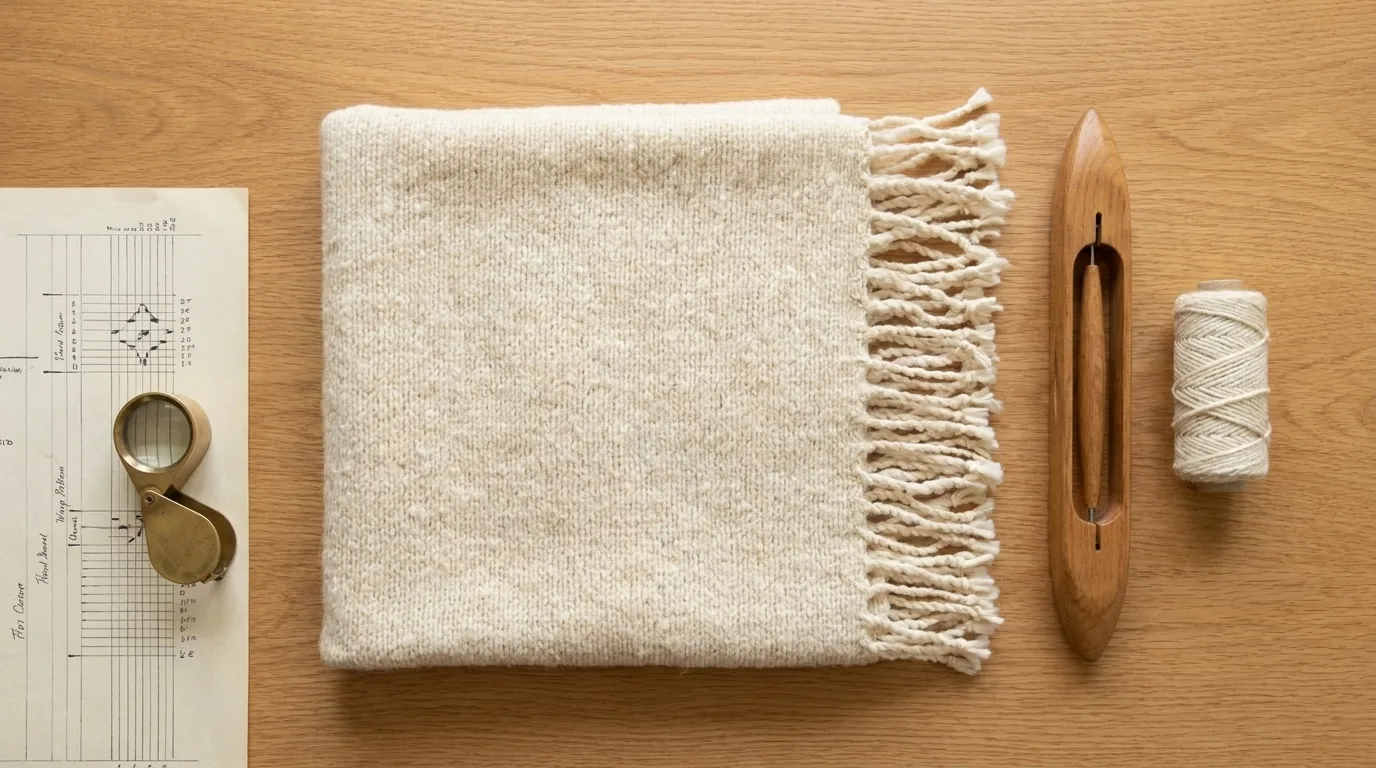
These are not marketing claims. They are the structural and material differences that explain why a Halvorsen shawl behaves differently in your hands than a department store wool wrap.
Hand-tied fringe — 96 individual knots per end, tied by Erik at the end of each loom run, like ropes lashed around a deck cleat. Factory wraps use machine-pressed knot bands that loosen within a year. The Halvorsen fringe holds for decades, never fraying, never thinning at the edge.
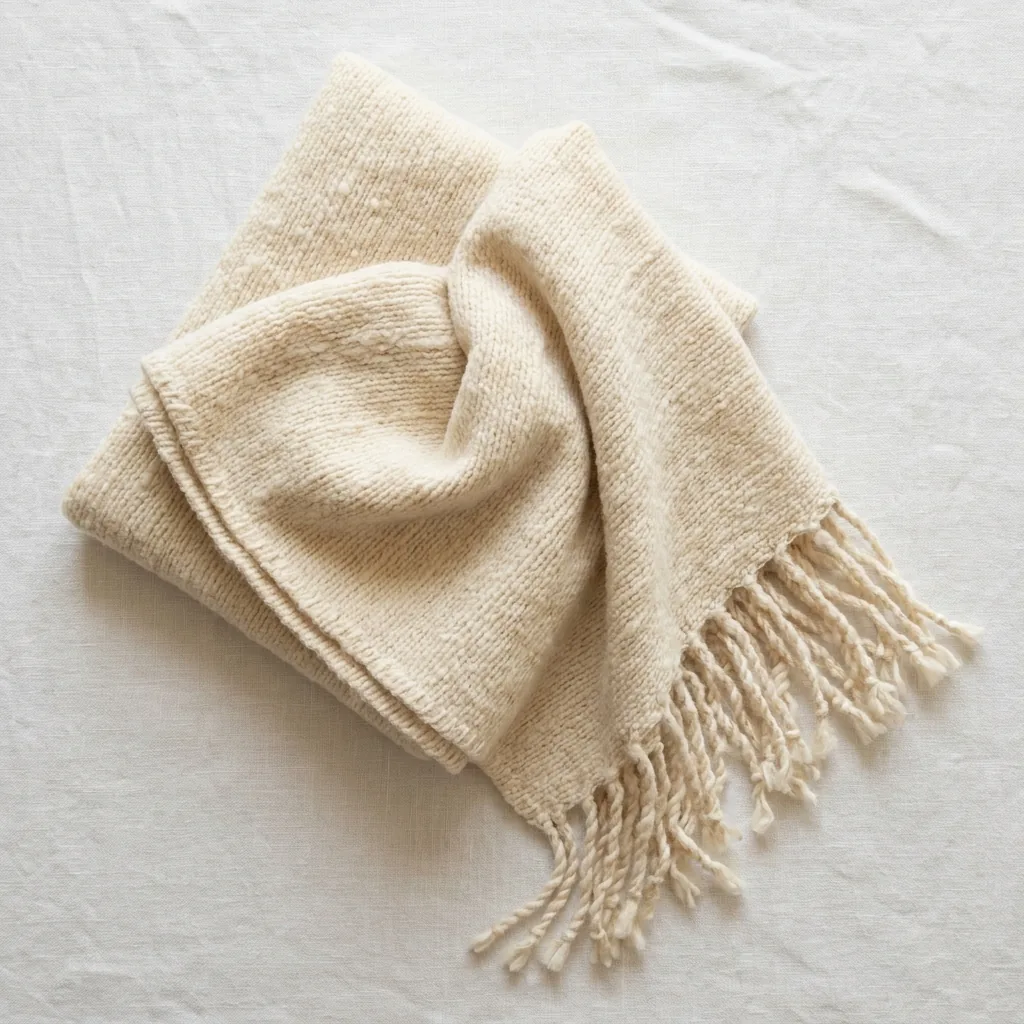
100% American wool, slubbed by hand-tension, sourced from a single sheep farm forty miles from the workshop. Each slub is visible tactile proof of human weaving. The wool softens over winters of use, deepening in patina, never thinning, never pilling like the blended fabrics sold at department stores.
Substantial weight — approximately 70cm by 180cm, heavy enough to wrap into rather than drape across the shoulders. The first time a recipient picks one up, the immediate response is the same: 'this is heavier than I expected.' That weight is the felt difference between a real shawl and a thin scarf.
The oldest Halvorsen still in service was woven in 1976 and is owned by a 91-year-old grandmother in Vermont who wraps into it every December. Fifty winters later, no thinning. The shawls require only occasional cold-water hand-washing and air-drying. They are designed to be passed down, not replaced.
Each shawl is hand-signed by Erik on the inside selvedge with the year of completion. A small woven Halvorsen tag — embroidered by hand in the workshop — sits at the lower fringe. No machine produces these marks.
See the shawl and its priceHow To Get One Of The Final 800 Halvorsen Shawls Before The Loom Goes Quiet
As of this morning, fewer than 480 of the original eight hundred Halvorsen shawls remain. The workshop closes permanently at the end of this season. After that date, no more shawls will be woven.
This is not a clearance event. It is not a seasonal markdown or a holiday promotion. It is the inventory of a closing workshop, sold direct.
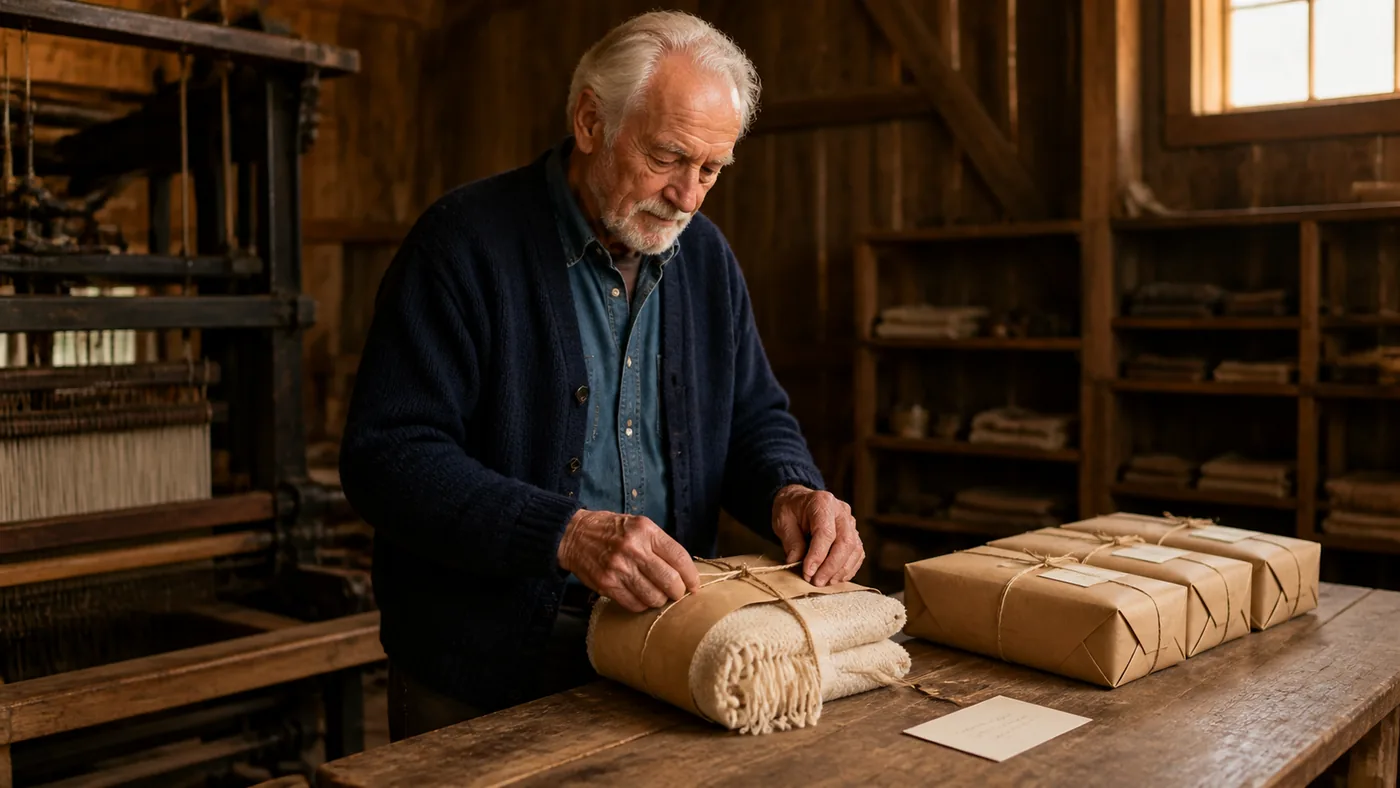
Each shawl is hand-folded by Erik or Margaret in the closing barn, wrapped in unbleached muslin, and shipped from Poughkeepsie. A 30-day return guarantee accompanies every order — wrap into it, then decide.
Recent buyers — the daughters and husbands who ordered direct — have begun writing back.
"Got mine three weeks ago for my mother's 73rd birthday. The slubs in the cream are exactly as Erik described in his note. She has not taken it off since."
"My wife held the shawl in her hands and immediately said, 'this is the weight my grandmother's was.' I had not expected that reaction. Worth every cent we paid."
In 51 years at the loom, Erik has had three shawls returned. Two for color preference, one for a gift that arrived after the recipient had already received another. Not one for quality.
The two colour returns are worth answering, because you choose the colour yourself. The final eight hundred left the loom in five: cream, charcoal, soft sage, dusty rose and camel. Cream is the one Erik wove most and the one in the photographs above.
For those who refuse mass-produced gifts. For those who want an object the person receiving it will actually wrap into. For those who recognize that some craftsmanship cannot be replaced once it is gone.
Sixty days to decide, and the risk is not yours.
Unwrap it. Hold it. Weigh it against whatever you were going to buy instead. If it is not what this page said it was, it goes back within sixty days and the purchase price is returned.
One thing said plainly rather than found out later: you cover the postage to send it back. That is a few dollars against seventy-nine.
Nobody will ask you to explain what was wrong with it.
— Erik Halvorsen, final master, the Halvorsen Workshop, Poughkeepsie, closing June 2026